
Researchers are discovering how visceral fat and brain health are connected. Most wellness routines keep physical fitness and mental health separate. We go to the gym for our muscles and do puzzles for our minds.
However, groundbreaking research from 2025 shows these systems are deeply connected. If you want a sharper, more resilient brain, the secret lies in your body composition. Specifically, it depends on the balance between your muscle mass and “hidden” visceral fat.
Muscle Mass, Visceral Fat And Brain Health: The Science
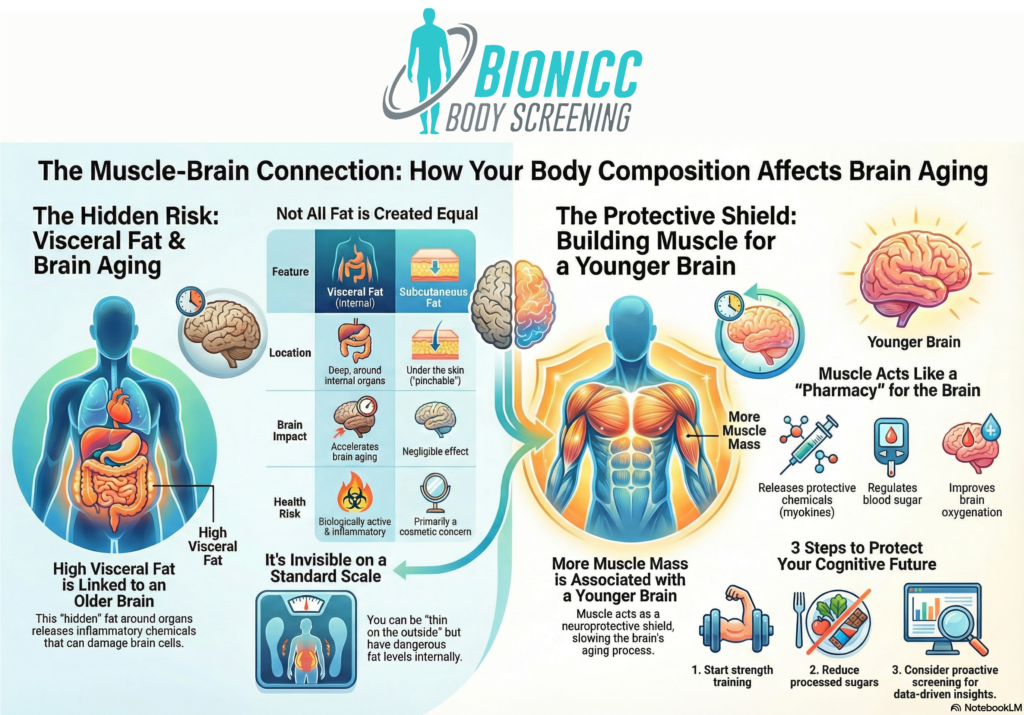
A landmark study by the Radiological Society of North America (RSNA) used AI to analyze full body MRI for body composition data. Researchers looked at over 1,100 adults to determine their “brain age.”
Led by Dr. Cyrus Raji of the Washington University School of Medicine, the study found that your body is a powerful predictor of brain health.
- High Muscle Mass: This is linked to brains that appear younger than a person’s actual age.
- High Visceral Fat: This is strongly tied to advanced brain aging and a higher risk of cognitive decline.
Understanding the “Hidden Enemy”: Visceral vs. Subcutaneous Fat
Not all fat affects the brain in the same way. Understanding the difference is vital for a proactive health assessment.
Subcutaneous Fat is the “pinchable” fat under your skin. While people often worry about it for how they look, the RSNA study found it has very little impact on brain aging.
Visceral Fat is the dangerous, “hidden” fat wrapped around your internal organs. It is biologically active and releases inflammatory chemicals. Over time, these chemicals can damage your brain cells. This is why visceral fat and brain health are closely connected.
Voice Search Quick Answer: What is a full body MRI scan?
A full body MRI is a non-invasive imaging test. It provides a detailed look at your internal organs, muscle mass, and visceral fat levels. This helps identify health risks like metabolic health issues before symptoms appear.
The “Muscle Shield”: How Strength Training Protects the Mind
Why does muscle mass act as a neuroprotective shield? Scientists point to three main reasons:
- The “Pharmacy” Effect: Active muscles release myokines. These are chemicals that encourage the growth of new neural connections.
- Blood Sugar Regulation: Muscles help manage glucose. High blood sugar is a known cause of brain cell damage.
- Oxygenation: Physical activity increases vital blood flow and oxygen to the brain.
A Note on GLP-1 Medications (Ozempic/Wegovy)
Weight loss drugs are very effective at reducing visceral fat. However, they can also lead to a rapid loss of muscle, a condition known as sarcopenia.
To protect your brain while using these medications, you must prioritize protein and resistance training. This helps preserve your “muscle shield.”
Stop Guessing: See Your Health with Bionicc Body Screening
Visceral fat is often invisible. You can be “thin on the outside” but have dangerous fat levels internally. Standard BMI measurements cannot tell the difference between muscle and fat.
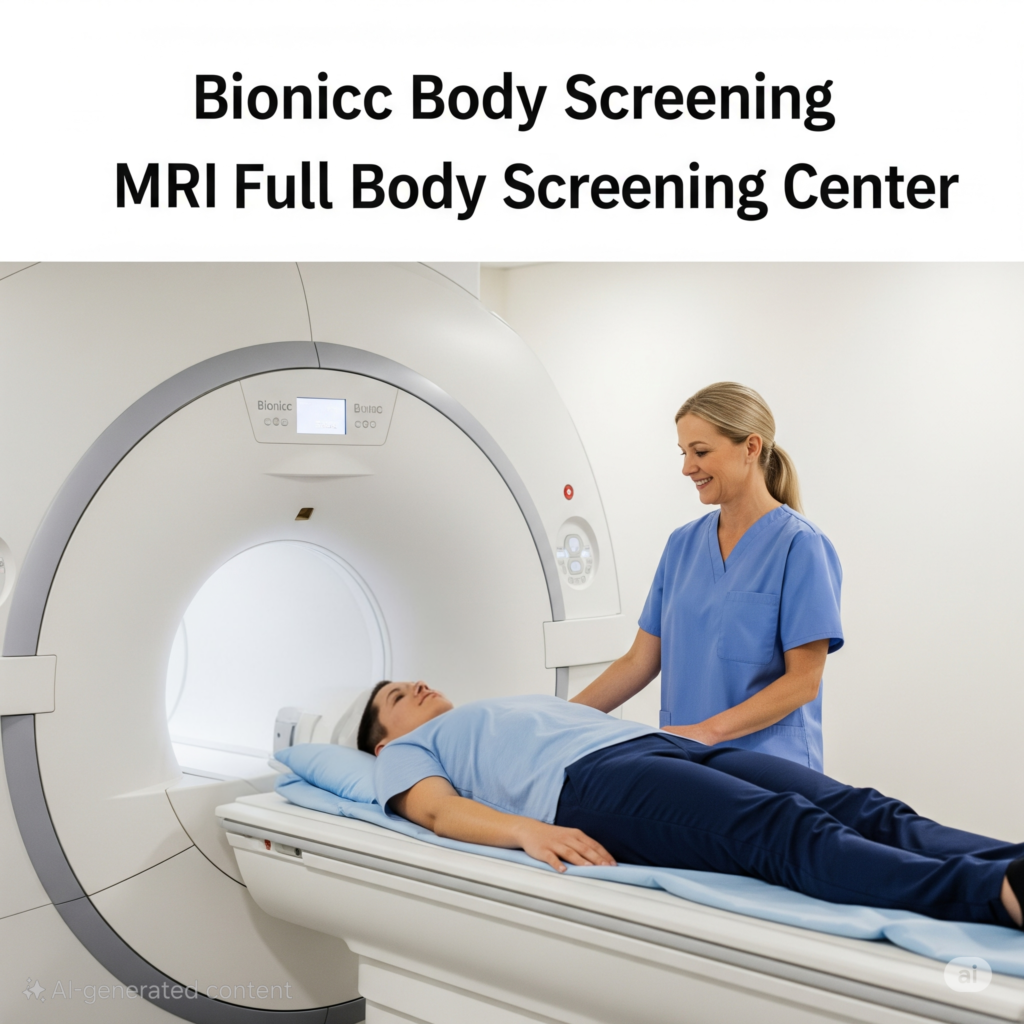
At Bionicc Body Screening, our MRI full body screenings provide a transparent view of your internal health. Your physician can review images for identifying high visceral fat or low muscle mass early, so you can take action to “turn back the clock” on your brain age.
Take Control of Your Cognitive Future Today
Step 1: Start strength training at least twice a week.
Step 2: Reduce processed sugars that fuel visceral fat growth.
Step 3: Get data-driven insights through a preventative brain health screening.
Schedule Your Proactive Full Body MRI Screening Today
Frequently Asked Questions:
What is the main difference between visceral fat and subcutaneous fat?
Subcutaneous fat is the “pinchable” layer directly under your skin, which is mostly a cosmetic concern. Visceral fat is the “hidden” fat stored deep inside the abdomen around your organs. Unlike subcutaneous fat, visceral fat is biologically active and releases inflammatory chemicals that can accelerate brain aging.
Can I have high visceral fat if I am thin?
Yes. This is often referred to as “TOFI” (Thin on the Outside, Fat on the Inside). Even if your BMI is in a healthy range, you can have dangerous levels of internal visceral fat that impact your cognitive health.
How does muscle mass protect the brain?
Muscles act as a “neuroprotective shield” by releasing myokines, which help grow new neural connections, and by regulating blood sugar levels to prevent glucose-related brain damage.
How do GLP-1 medications like Ozempic affect brain health?
While these medications effectively reduce visceral fat, they can also cause rapid muscle loss (sarcopenia). To protect your brain while on these drugs, it is critical to prioritize resistance training and high protein intake to maintain your “muscle shield.”
How can I accurately measure my visceral fat levels?
Standard scales and BMI cannot distinguish between muscle and visceral fat. A full body MRI is the gold standard for providing a detailed, non-invasive look at your internal body composition.
Author: Ryan Ringold is the Managing Director and Patient Advocate at Bionicc Body Screening. Continuing the mission of his father, Dr. Warren Ringold, Ryan is dedicated to providing Metro Detroit with direct, referral-free access to gold-standard preventative imaging. By simplifying complex medical data into actionable insights, he empowers individuals to take ownership of their health through early detection.
All content is fact-checked by the Bionicc Clinical Team to ensure medical accuracy.
Last Updated: February 20, 2026
Sources:
National Institutes of Health (NIH). General information regarding the health risks of visceral fat and the benefits of muscle mass in aging populations.
Radiological Society of North America (RSNA). (2025). “More Muscle, Less Belly Fat Slows Brain Aging.” Press Release.
Mallinckrodt Institute of Radiology. Research contributions by Dr. Cyrus Raji on brain age and body biomarkers.
DiagnosticImaging.com. Emerging MRI Research Suggests Link Between Muscle Mass, Belly Fat and Brian Aging