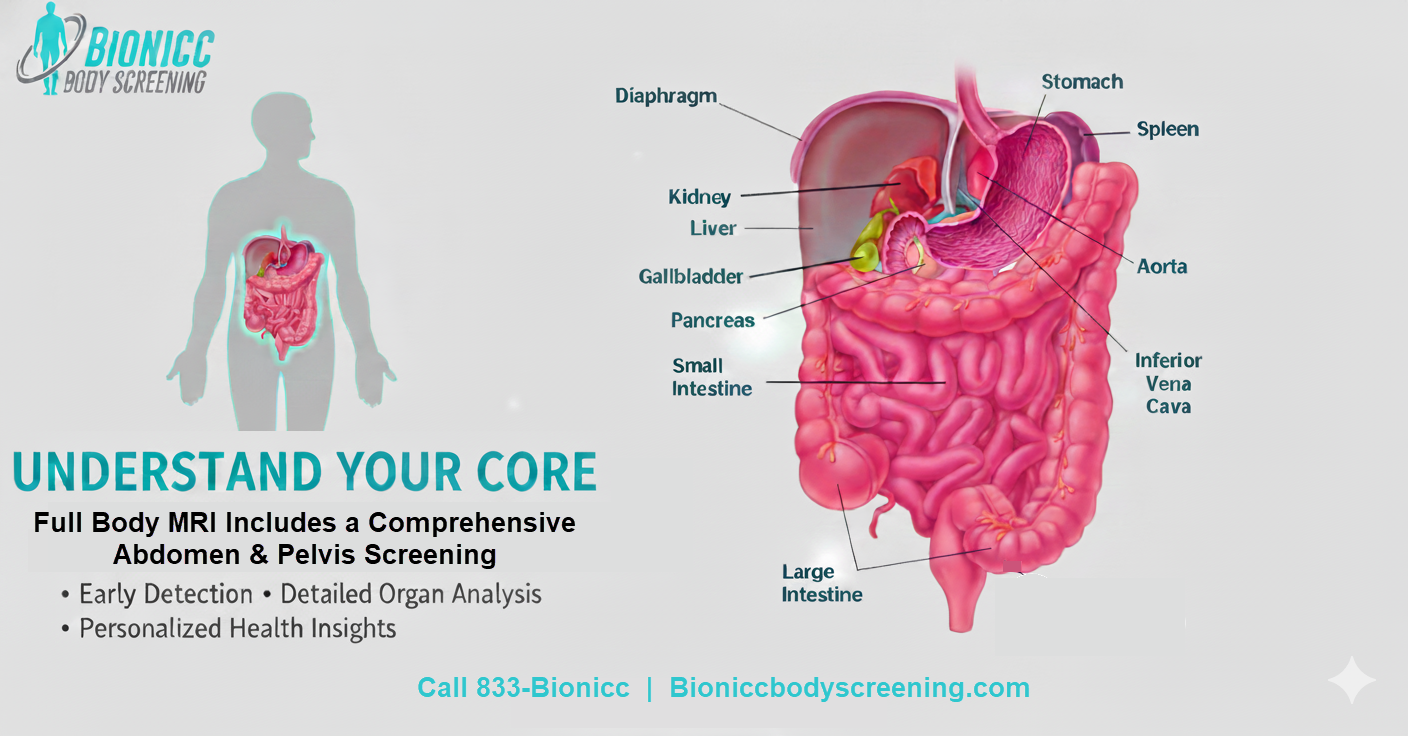
The quest for a long and healthy life has brought about a new age of medical screening. A full body MRI screening is at the forefront of this movement.
This advanced imaging tool was once used only for specific diagnoses. Now, healthy people use it to get an early, non-invasive look inside their bodies.
What is a full body MRI screening?
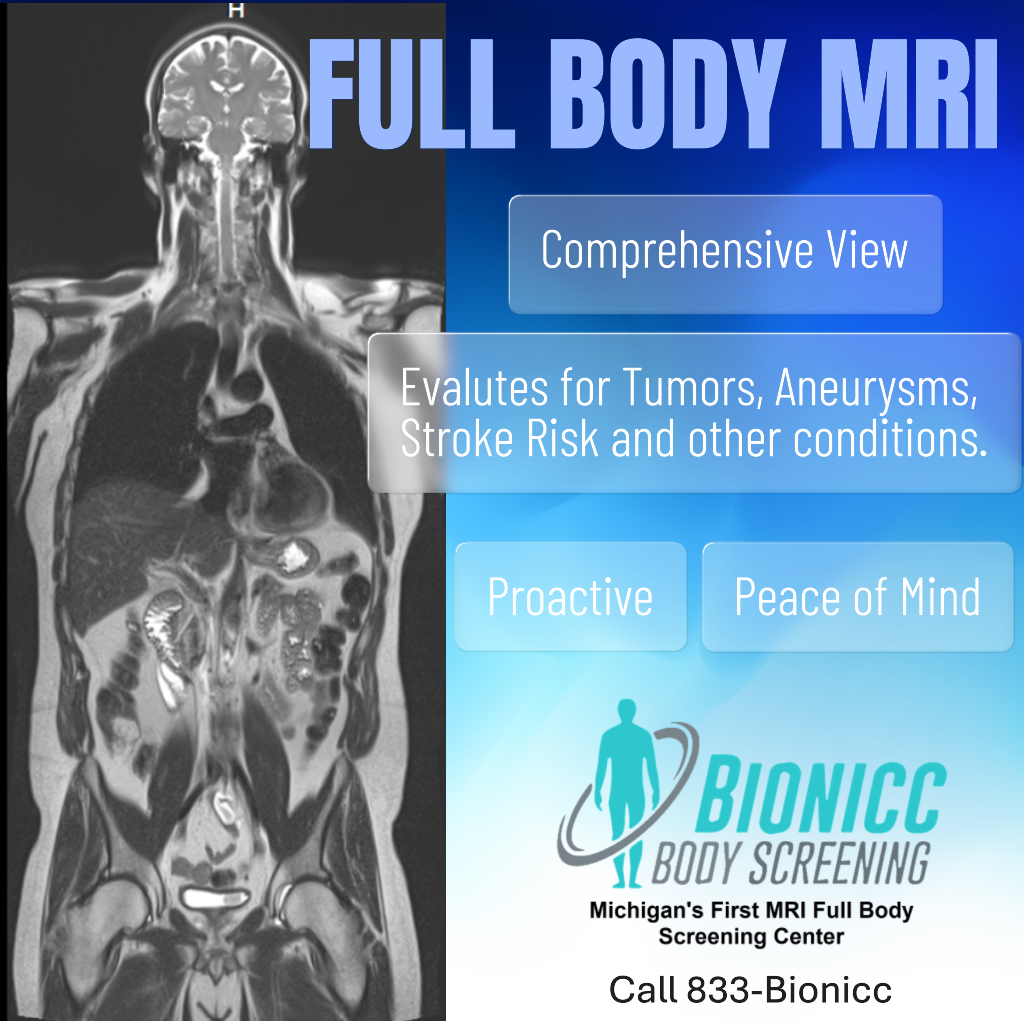
A full body MRI is a powerful diagnostic tool. It uses a strong magnetic field and radio waves—no ionizing radiation—to create remarkably detailed images of all organs and tissues throughout the entire body.
This ability to uncover hidden, “silent” diseases before any symptoms appear makes the full-body MRI a revolutionary tool in preventative healthcare.
These scans set a crucial health baseline. They can detect many potentially significant conditions in their earliest, most treatable stages. This move from treating illness to preventing it is the core of Bionicc Body Screening’s mission.
What ‘Silent’ Conditions Can a Full Body MRI Detect?
The main benefit of a proactive full body MRI screening is its ability to catch conditions long before a person feels sick. The following are real-life examples of findings at Bionicc Body Screening and show why this early disease detection is so important.
Can an MRI detect early signs of liver disease and pancreatic issues?
The abdomen is a frequent site for silent pathologies.
The MRI offers a clear view of vital organs like the liver and pancreas.
Fatty Liver Disease (MASLD/NAFLD): This is a condition where extra fat builds up in the liver cells (hepatic steatosis). It is extremely common. An estimated 25-30% of the global population is affected. It is often linked to metabolic syndrome, obesity, and diabetes
- MRI is exceptionally effective at finding and measuring this fat content.
- The Silent Threat: Fatty liver often shows no symptoms in its early stages.
- Value of Early Warning: If untreated, it can lead to cirrhosis and possibly liver cancer. An MRI diagnosis allows for crucial early lifestyle intervention.
- Small Pancreatic Masses: An abnormal growth of tissue in the pancreas is an incidental finding that needs urgent follow-up. While most small masses are benign cysts, a solid or concerning mass can be a sign of pancreatic cancer.
- Life-Saving Detection: Pancreatic cancer is famously hard to diagnose early. It is often asymptomatic until advanced stages. Finding a small mass early greatly increases survival rates compared to a diagnosis made from late-stage symptoms. [American Cancer Society: Pancreatic Cancer Survival Rates]
- Hiatal Hernias: This is a very common condition. It involves the upper part of the stomach bulging into the chest. It is often asymptomatic, but it can cause bothersome symptoms like heartburn or acid reflux. Early diagnosis helps manage long-term discomfort and prevent complications.
[Read more about NAFLD at Mayoclinic.org]
What can a full body MRI reveal about kidney and urological health?
The kidneys and prostate are two more organs where an MRI can find problems before they cause any noticeable discomfort.
- Complex Kidney Findings: Structures found within the kidneys may suggest lesions. Often this is a benign tumor called Angiomyolipoma (AML). However, a mixed-signal mass requires more tests to rule out renal cell carcinoma (kidney cancer). Many of these lesions are incidentally detected (asymptomatic).
- Enlarged Prostate (BPH): This is a non-cancerous growth of the prostate gland. It affects up to 90% of men over age 80. The condition can cause bothersome urinary symptoms. Early detection allows for monitoring or preventative treatment before quality-of-life issues, like frequent nighttime urination, develop.
Why Choose Bionicc Body Screening for Your Proactive Health Journey?
The combined importance of these findings shows the deep value of proactive full body MRI screening. It supports a fundamental change from a reactive healthcare model to a truly preventative approach.
Ready to take control of your health baseline?
Does Full Body MRI Detect Cancer?
Schedule Your Proactive Full Body MRI Screening Today.
Does a Full Body MRI Detect Early Heart and Systemic Issues?
The chest area can reveal critical clues about overall systemic health.
- Enlarged Heart (Cardiomegaly): This finding means the heart is larger than normal. This is often a way the heart tries to compensate for underlying heart disease. It signals a problem, such as uncontrolled high blood pressure or heart muscle disease.
- Stopping Progression: Cardiomegaly can be present without any noticeable symptoms. Early MRI detection helps identify and treat the root cause to prevent progression to heart failure.
- Small Pleural Effusions: This means a small amount of extra fluid has collected around the lungs. While small, gravity-related collections can be harmless, effusions on both sides (bilateral) usually point to a systemic cause that affects the whole body.
- A First Clue: Common causes include Congestive Heart Failure (CHF), kidney failure, or liver failure. Early detection in a person with no symptoms can be the first clue to an undiagnosed systemic condition.
- Lung Tissue Changes: Scarring and thickening of the lung lining can be a sign of old inflammation or infections. These findings need expert review and possible follow-up imaging. This is necessary to confidently rule out a serious, but still early, malignant process (like lung cancer).

The Core Benefits of Full Body MRI Screening
Our non-invasive, radiation-free advanced MRI technology provides superior soft-tissue contrast compared to other imaging methods. The benefits of this proactive approach are clear:
- Early Detection of Silent Diseases: Finding conditions like Fatty Liver or Enlarged Heart when you have no symptoms allows for treatment before irreversible organ damage happens.
- Establishing a Health Baseline: The scan gives a complete snapshot of your major organ systems. This is a critical reference point for future clinical changes.
- Personalized Healthcare: It helps shift medicine to a proactive model. It gives clients useful information for lifestyle changes or early management.
The high rate of clinically relevant incidental findings—even in apparently healthy individuals—shows that the full-body MRI is a powerful, non-invasive tool for preventative medicine and longevity planning.
To learn more about the procedure and limitations, please view our frequently asked questions and answers.
Schedule Your Proactive Full Body MRI Screening Today! Call 833-Bionicc (833-246-6422)
Written by The Bionicc Body Screening Team. Date of Last Update: October 2025.